


At some juncture between now and August 15th, 2029, Sir Keir Starmer – or his successor as Labour leader – will pay a visit to King Charles III and request that a General Election is held.
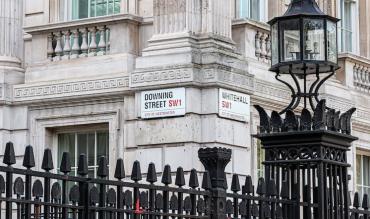
What follows very soon after is that the Prime Minister of the UK stands outside 10 Downing Street, before a phalanx of journalists and photographers, and informs the nation that Parliament is about to be dissolved, usually for a period lasting three weeks or so.
You may recall Rishi Sunak doing this in May 2024, eschewing an umbrella in the pouring rain. He was going for optics that had him portrayed as stoic. In the event he just looked wet.
Regardless, the dissolution of Parliament allows for MPs to knock on doors, firmly shake hands, and kiss babies. It allows them to campaign; to try and convince the electorate that they deserve another stint in Westminster.
To what end this serves will forever be cast in doubt. Certainly an entire industry has built up around election time, with pundits feverishly speculating on the latest polls and opinion pieces written up by the multitude.
As for the public, a small majority will be swayed by manifestos that are sadly very rarely upheld while some more will be influenced by a PR calamity. Such as being soaked through in a very expensive suit, or eating a bacon sarnie all wrong.
A fundamental truth however – and one that is more pertinent than ever as we reside in an increasingly tribalized world – is that many of us have already made our minds up.
Right now, potentially four years before the next election is announced, we know where our cross is going on the ballot sheet and this makes the current odds in the politics betting for most seats won fascinating reading. They are as follows…
- Remain UK - 5/6
- Labour - 5/2
- Conservatives - 9/2
- Greens - 12/1
- Lib Dems - 50/1
There are several angles from which to approach these odds, not least there being a tacit acknowledgement that Labour have not enjoyed any sort of honeymoon period in power.
After 14 years of Tory rule – a time blighted by scandals, ever-rising disenchantment, and five different Prime Ministers, including the hapless Liz Truss – it was anticipated that Starmer’s government would initially symbolise a clean slate, and in turn benefit from all the grace and favour that comes from being viewed as a welcome antidote.
Instead, every wrong turn has been met with widespread reproval from a public that was supposedly becoming inured to political controversy.
Just 15 months after taking power, Sir Keir Starmer’s position is under threat from in-house ‘plotters’ while his party are a chunky 5/2 to retain government when next we vote.
Yet even this notable development pales to the orbiting rise of Reform UK, a rise dutifully reflected in the betting.
Starting out as the ‘Brexit Party’ and subsequently rebranded in 2021, Reform only has five members of parliament and as recently as 2023 were generally perceived to be a ‘spoiler party’ for the Conservatives.
In February of this year however they topped a YouGov poll for the first time while it is highly relevant how well they have fared in local byelections of late.
By some considerable distance, the most important factor when determining the future political landscape of this country is not whether Labour can be trusted to deliver on their promises, or even trusted at all.
It’s whether a majority of the 48 million who are eligible to vote in the UK deem Reform to be fit, proper and ready for office.
Reform
With the divisive, but indisputably charismatic, Nigel Farage at the helm, Reform UK are guaranteed media coverage, an invaluable advantage they hold over the Conservatives.
Yet as prominent a figure Farage is it would be a mistake to attribute too much of Reform’s recent successes directly to him.
What has kept them in the national conversation post-Brexit is what they chiefly represent, an anti-immigration, anti-establishment stance that chimes with many.
But though the strength of feeling among some regarding the issue of immigration – and by loose extension, a possible return to EU membership – should never be underestimated, as Brexit taught us, the party’s USP could also ultimately deny them power.
A general election will bring far greater scrutiny of other policies, policies that may not necessarily connect with the working man.
Labour
In July of 2024 Labour inflicted the Conservatives’ worst ever defeat in a General Election. In hindsight though, did the Tories inflict this on themselves, with Labour the only viable rebound option?
Certainly there has been very little of the positivity that accompanied New Labour’s succession to power in 1997 under Tony Blair, and with deep divisions within the party regarding key issues leading to in-house fighting the government, in many ways, have become their own worst enemy.
There was even a reported attempted coup to oust the Prime Minister, with Wes Streeting in the frame to replace him.
The blunt fact is that all of the polling intimates that Labour have haemorrhaged support since taking office, and it’s extremely telling that this includes younger voters, who have drifted to the Greens or Reform, depending on their sensibility.
A crucial element to the next General Election is to what extent Labour appeals to a tract of voters who are enticed by Reform but not wholly convinced by them.
Conservatives
Kemi Badenoch inherited a poisoned chalice on becoming Tory leader and it’s fair to say she has reinstalled some stability to the party, no small feat in itself.
Where the MP for North West Essex has singularity failed though is in making any notable impact in re-establishing the Conservatives as a major force in British politics.
They remain – in general perception at least – a party in decline. A party looking on from the margins.
To what degree Badenoch and her shadow cabinet can be blamed for this, and to what extent it derives from the public’s intention to punish the party further after adamantly voting them out of power last year, is up for debate.
But perhaps, in the great scheme of things, this debate is moot, save for being an interesting discussion point. The fact of the matter is that the Tories are not a credible option right now, as their current odds indicate.
